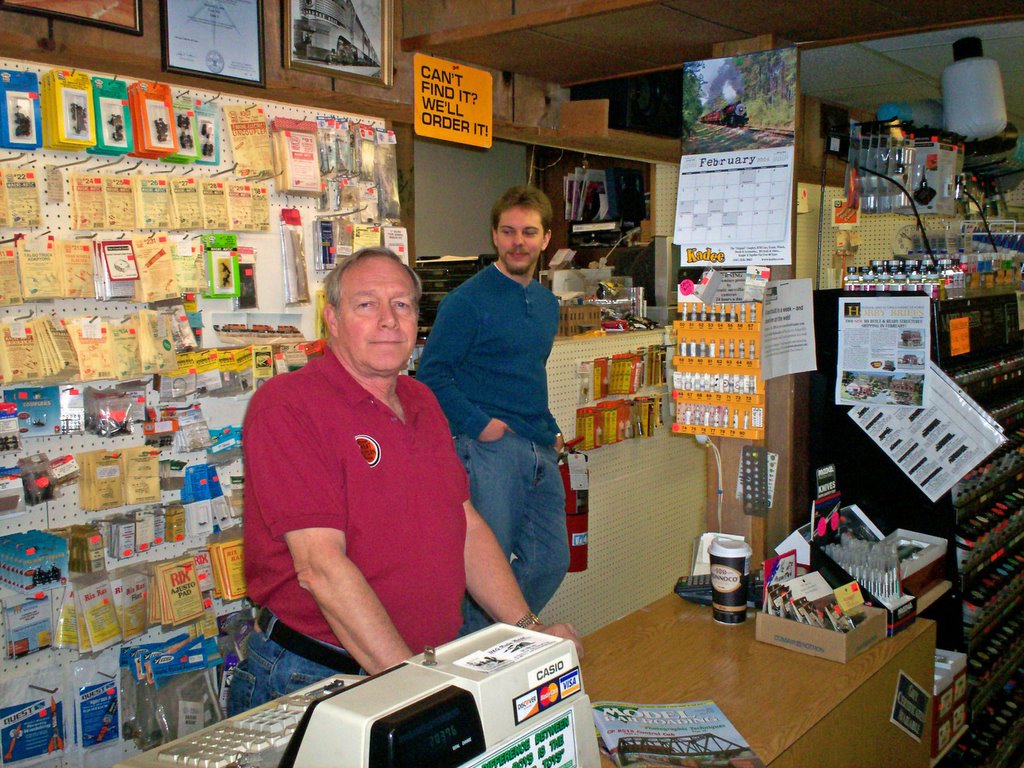
Our next workshop is scheduled for Thurs. November 29th at 7:30. We will begin construction on the Black River Junction layout that was featured in Model Railraoder starting with the January 2007 issue.Wish him luck... I'll try and visit one of the workshops.
Like any layout we will start by constructing the benchwork. Be a part of this project and learn how really simple it is to build your own model railroad. Unlike the layout in the series we will be using cork roadbed and code 83 Atlas FlexTrack.
Structures and Trains by Fred
DATE: November 29th, 2007 Address: 12 North Second Street
TIME: 7:30 PM Geneva, IL. 60134
For Information: 630.208.9011 or 630.584.3429
Future Work Shops:
Black River Junction (We will actually build this layout )
Structures: Plastic & Craftsman Kits building, Painting and Weathering
Digital Command & Control
Scenery Construction

 MTH takes some flak in comments over at Model Railroader,
 This model is the least asked for model in any poll I have seen, but here it is!!!!!!!!!It's not on my wish list, but it's a very neat looking model. I might become an Erie fan.
WOW! I can't wait to run out and NOT buy one of those!!
I hope any future releases are a little more grounded in the reality of the hobby


The atmosphere here holds between 40 and 50 percent less oxygen than at sea level. Extra oxygen is pumped into the unpressurized rail cars as they roll across the Tibetan plateau, but it's not clear that it does much good. All around me in the dining car, passengers were suffering the hangover-like symptoms of altitude sickness: throbbing headaches and severe nausea.
I was feeling relatively chipper due to Diamox, a prescription drug that prevents altitude sickness. Even so, I was lightheaded and a little dizzy. Back in my compartment, I plugged the oxygen hose into the wall and inhaled deeply. Almost instantly my mind cleared. But the effect lasted only as long as I breathed oxygen from the hose.
The surrealness was heightened by what looked like hundreds of enormous golf tees lining the tracks. They're an attempt to solve the railroad's most vexing problem.
Four hundred miles of the route lie atop a particularly unstable form of permafrost that thaws during the day and freezes at night, causing the tundra above it to rise and fall by inches. To try to prevent tracks from buckling and cracking, Chinese engineers elevated more than 100 miles of it and installed the giant golf tees along other stretches. These are cooling pipes that use solar energy to turn liquid ammonia into gas, chilling the ground and preventing the permafrost from melting.

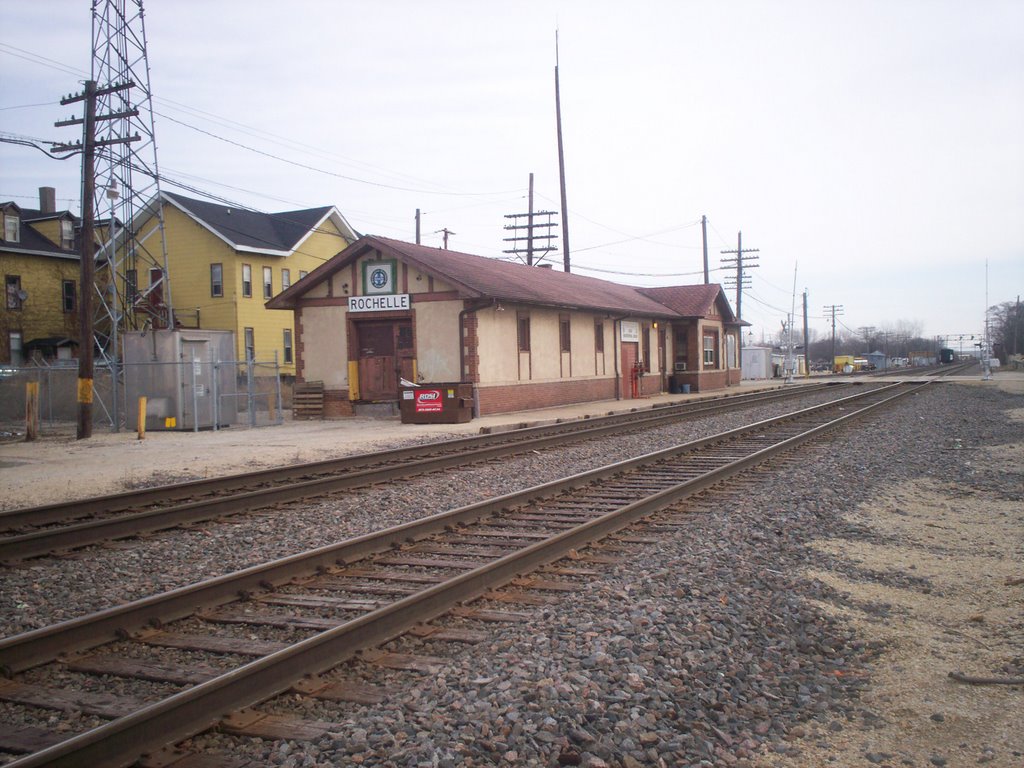
Even casual passersby pause to admire this beautiful two-story brick and limestone depot built in 1876. Onetime headquarters for the Illinois Central's Northern Division, the 19-room structure featured passenger facilities on the first floor and housed division officials and staff on the upper level.
As times changed, division headquarters were moved elsewhere; passenger service ended in 1939, and the depot closed in 1967. Freight trains used the line into the 1980s. The tracks have since been removed.
As disuse led to disrepair, concerned citizens began efforts to save the historic station. It has been returned to life as the Amboy Depot Museum, filled with railroad memorabilia and local history items.
The telegrapher's office features a variety of telegraph keys, timetables and photos of train wrecks that occurred at Amboy. Original benches grace depot waiting rooms; there are original railroad documents, photos, railroad lanterns, switch keys and a great deal more.
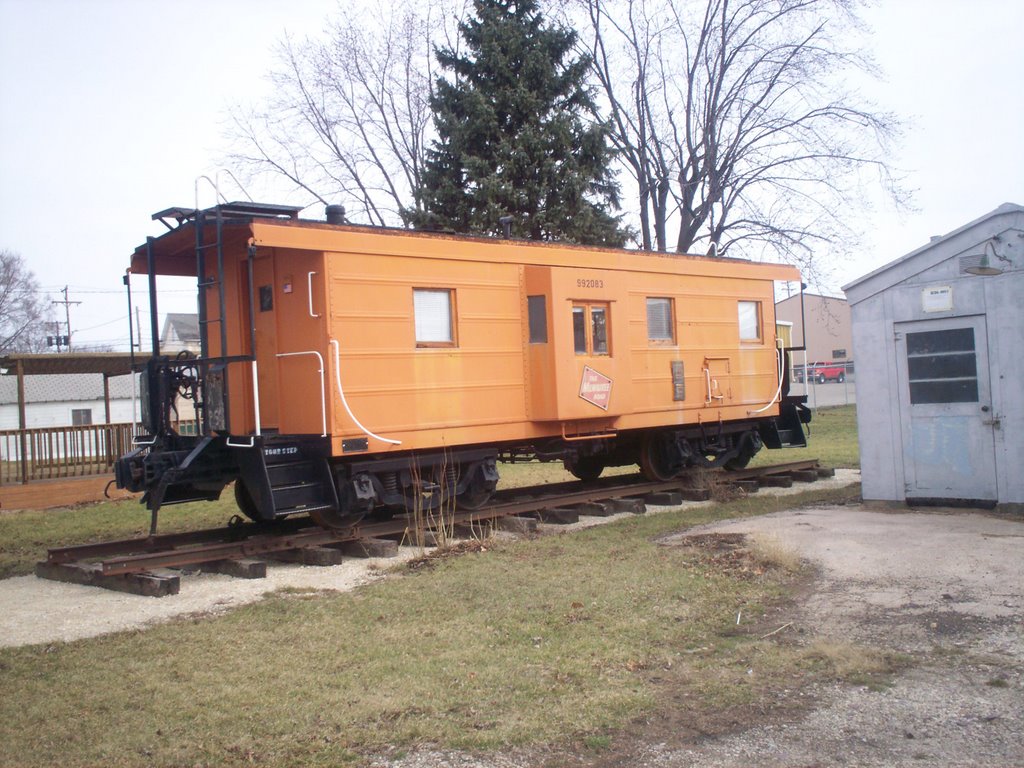
A steam locomotive, a 1920s-era caboose and a century-old IC freight house on the grounds are open to tour.
Sitting at East Main and South East Avenue, the depot is open year-round, 1-4 p.m. Wednesday, Thursday, Sunday and holidays, 10 a.m.-4 p.m. Friday and Saturday. Admission is free.
Amboy is about 110 miles from downtown Chicago. For additional information, call 815-857-4700.
What do some servicemen stationed in Iraq do to pass the time? Hobbies! Specifically, model trains! Here, Lt. Patrick Anderson works with some of our HO scale hopper cars. Patrick and a few others in the outfit have also built an operating layout using KATO UNITRACK.And Kato has pictures of it here. (On the lefthand menu of the Web site of the Japanese model railroad manufacturer Kato USA, click on the Customer Photo Gallery and go to the Baghdad Hobby Club at the bottom of Page 2.)


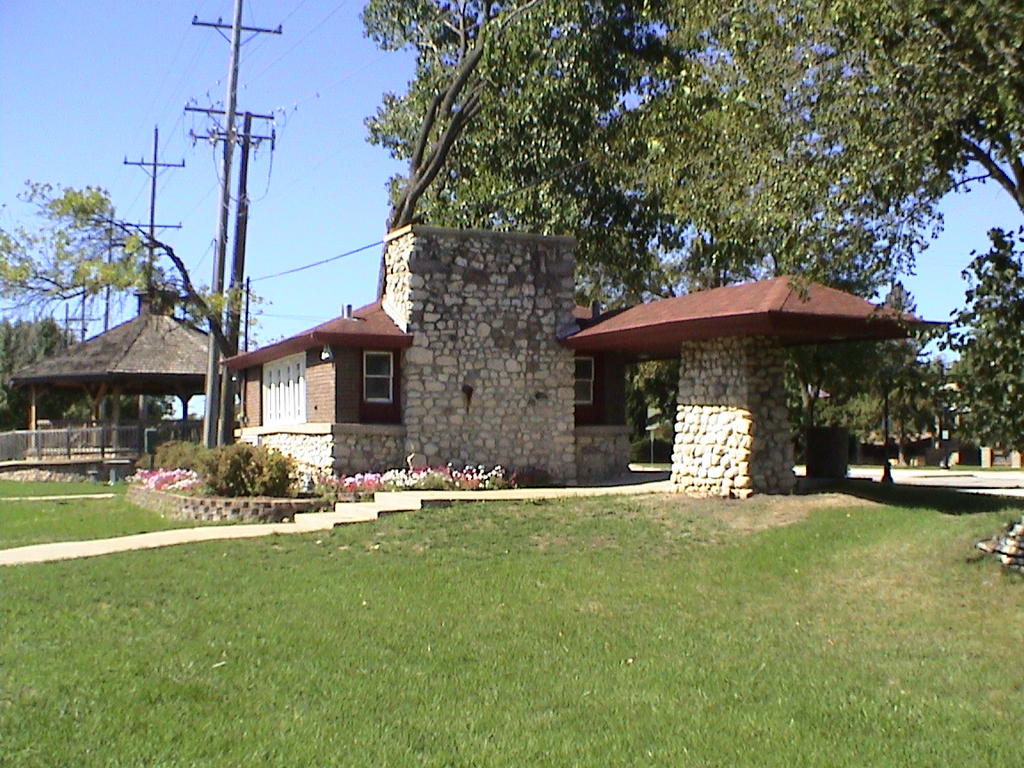
At Grinnell College, trains have been a part of campus life since the school's 1846 founding.
Cargo trains pass through campus, running north and south, two or three times each day, said Dann Hayes, director of media relations. There is another line that runs east to west through the town of Grinnell.
"Because of that, cross trains have to go extra slow, which is a bonus for us," Hayes said.
The trains blast their horns at least two intersections before arriving on campus, giving plenty of warning. To further ensure student safety, procedures to deal with train collisions have been outlined in handbooks that will be distributed in every classroom, office and at every telephone at the school, Hayes said.
"For the most part, I think it's just common sense."
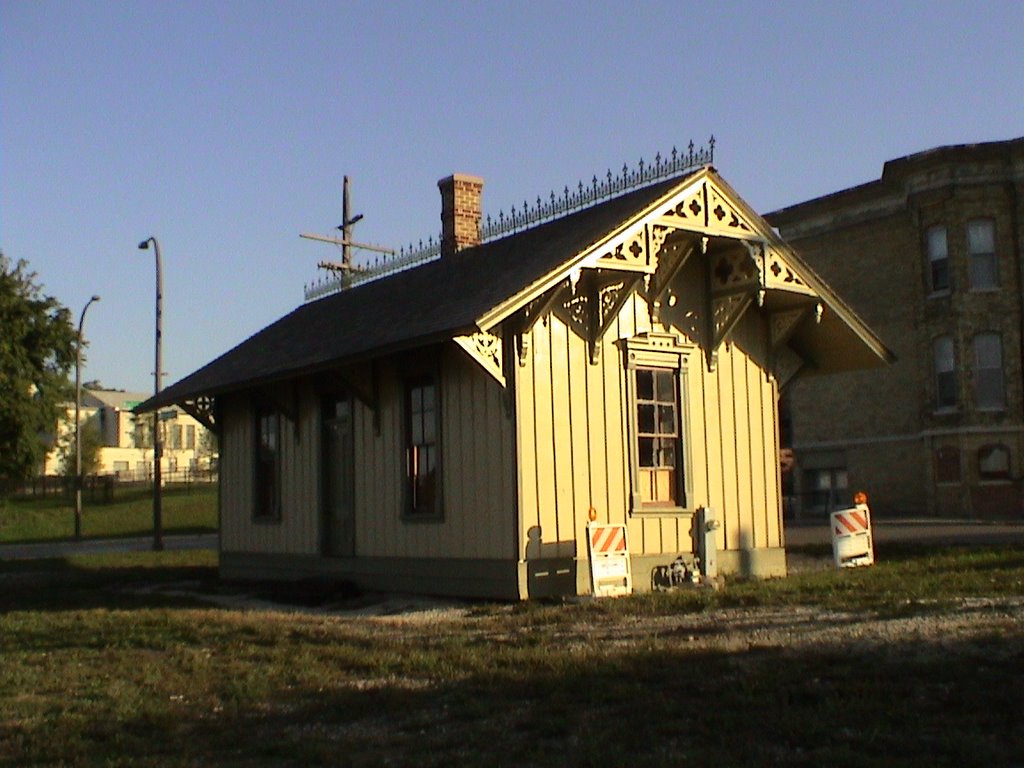
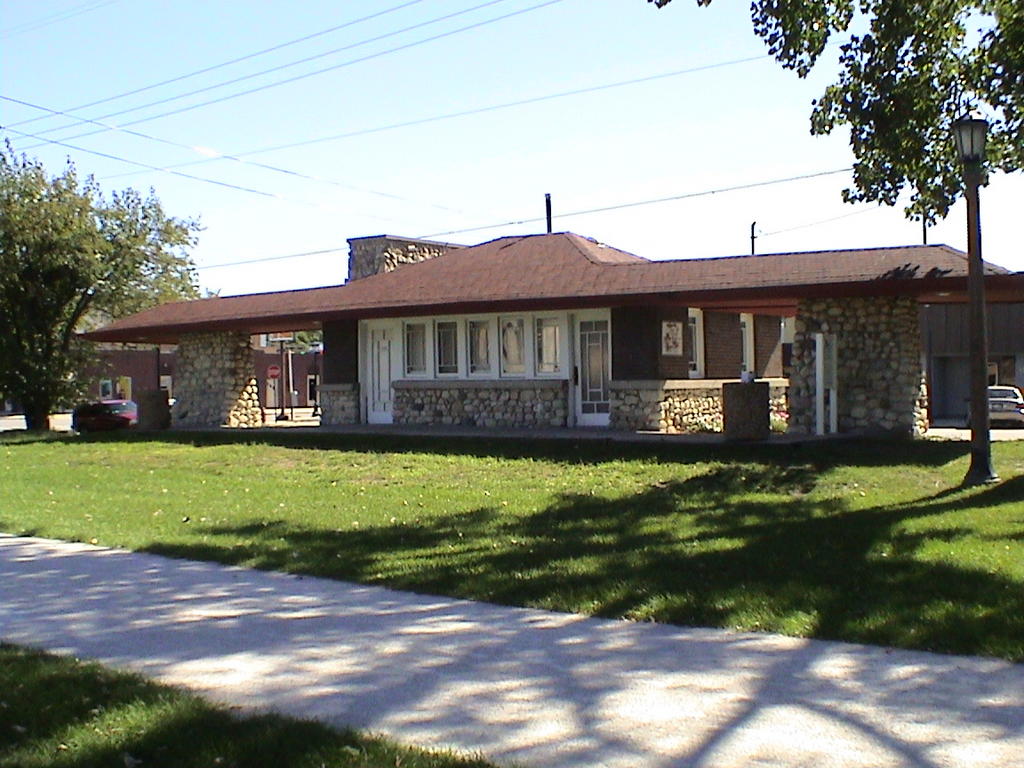
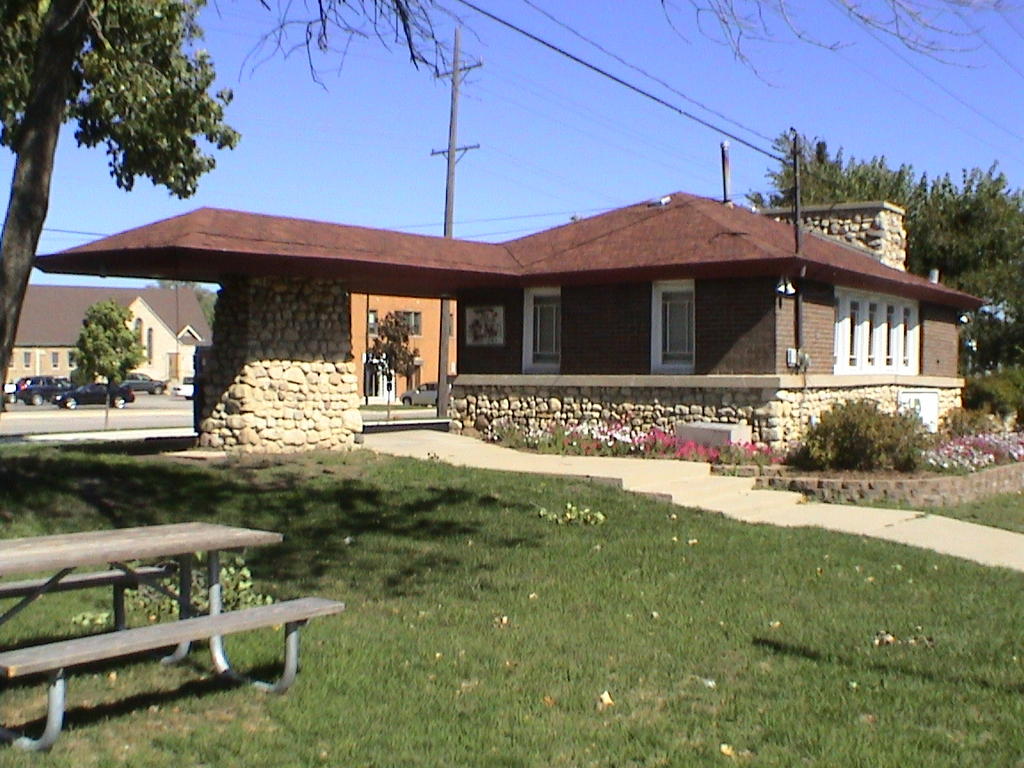
Train depots have plenty of history in Wayne. Karen Armbrust said the first one, known as Dunham Depot, was built in 1850 when one of the village’s founding fathers, Solomon Dunham, wanted a rail line closer to the land he owned.The picture is not on the link but it's a spitting image of the old Revell Small Town station.
The newer, bigger depot that the village is now trying to restore into the museum was built in 1884 and eventually boarded up after the last stops in 1950. A few years later, Karen said, it was moved to the Dunham Castle property by family member Jane Dunham.
Anyone interested in getting involved or seeking more information about the museum project can contact the village at (630) 584-3090.

Last train ran on this line in the late 1980s so this layout could cover a number of eras.


So when a a 13 year old kid asks you a big question, consider your response as it will hang in their office for the next 40 years. Ms. Ters gave a thoughtful, wise, and kind response to me. God bless her.
April 4, 1967
Mr. Bill Baar
1047 S. Clinton
Oak Park, Ill 60304
Yours is an interesting question, Bill...
for a fellow
your age.
As far as I know, the fellows working here were never exactly groomed for careers in the model railroading field. The Art Department became skilled in their line of work, and those with a special desire to work with railroad art found just what they wanted here.
The editors, of course, were skilled in the handling of words, and they could have succeeded anywhere. It happens, however, that some of them are more interested in railroading, and thoroughly enjoy their jobs. The man who succeeds in doing the work he would rather do than anything else is lucky indeed. So many people work at jobs which either bring good salaries, jobs which may be convenient to their homes, or jobs which they may hold for any number of reasons other than that they really enjoy them.
If you think you may have an aptitude toward writing, you might wish to do an article some day on your own railroad pike. If you are lucky enough to have it published, you might be on the way to becoming a "career model railroader", creating a job for yourself in that field --or if you have money-- you might want to start a hobby shop some day.
This all sounds like dreams stuff, Bill, but hope it does some good.
Sincerley,
Margaret J. Ters
Editorial Secretary
My youthful years in the early fifties in south Oak Park along the
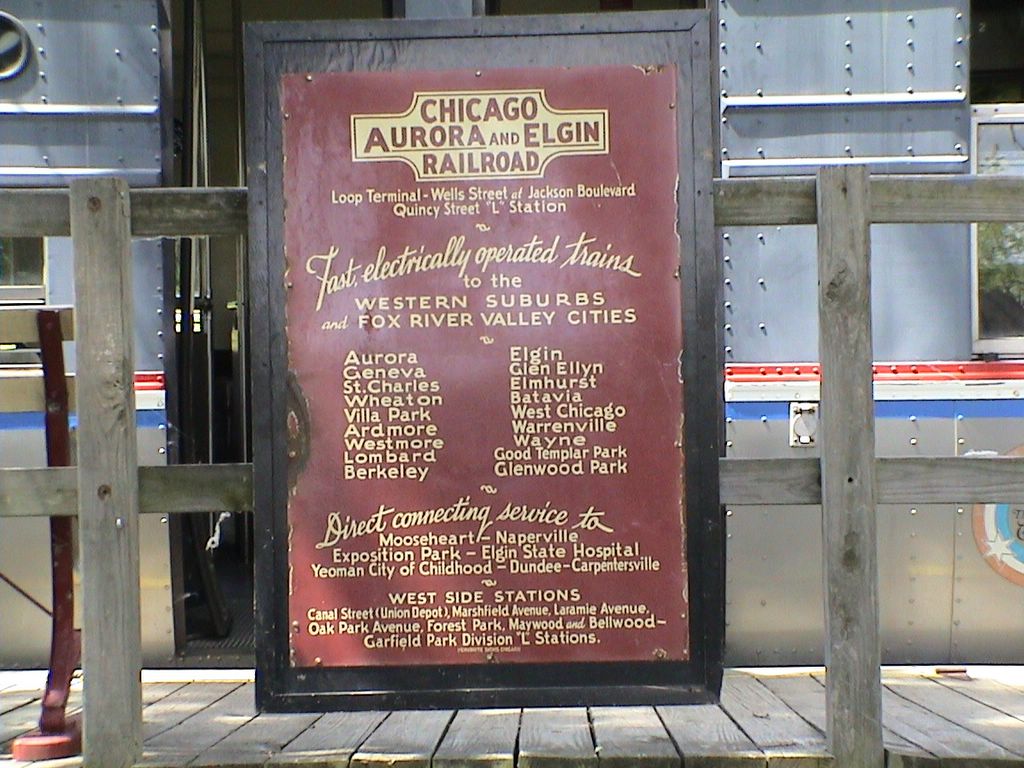
CA&E provide many wonderful memories of the "Roaring Elgin." From our home near Cuyler and Jackson, it was a short walk or bike ride to the wonderful transportation corridor that later became the Congress Expressway. There was a constant parade of trains ofChicago Rapid Transit, CA&E, Soo Line, Chicago Great Western, and B&OCT. Those tracks produced many colorful attraction - the multi- unit lashups of the CGW; the Soo's FA's on freights and F units on their passenger trains and even steam on infrequent occasions; the diminutive SW-1s and even a rare 0-6-0 of the B&OCT; the ancient wooden cars of the CRT, and most important, the magnificent cars of the CA&E.
And the trains of the CA&E - it would be difficult to forget many special memories of those happy and carefree years:
- the lightning-like arcs of the CA&E's as they moved along the third rail in the darkness on a snowy night.
- the mysterious third track with its interlocking at the Gunderson station that was never seen in operation. That mystery was later explained by the CERA's Bulletin on the CA&E.
- the station stop by CA&E westbound trains on the west side of Oak Park Avenue as they did not use the CRT platform on the east side.
- the slow passage of the CA&E mu'ed juice jacks as they headed east on their way to the Central Avenue interchange with a few cars and a caboose. The head brakeman on the lead unit would lift the hinged "L" platform edges to allow the wide freight cars to pass and the conductor on the caboose would drop them back into place for the next "L" train.
- the deep rumbling sound that marked the passage of each CA&E train as it swiftly passed through Oak Park. The proximity of CA&E trains to the "L" trains as the CA&E trains waited for the slower CRT trains to make station stops.
- the occasional trips in later years to Forest Park to watch the CA&E trains as they prepared to head west from their "temporary" station. The huge piles of Herald American newspapers on the front platform of the lead car with the motorman who would drop them at the station in the western suburbs.
- the sad failure to realize that the CA&E was surviving on borrowed time and would never return to downtown and instead, would quietly pass after many promised the revivial of the line after the completion of the Congress Expressway.
As a result, my only "near" CA&E ride has been on the #431 at Union, Illinois - a sad commentary for one who witnessed this mighty carrier in its final years.
Chuck Owen
Bogota, Colombia
During 1939 and 1940 the Milwaukee Road produced in its own shops 3188 of these cars, with two slogans. "Route of the Hiawathas" and "Route of the Electrified Olympian" Some lasted until the 40 year rule prevailed in 1979 and 1980. Cars repainted after 1958 recieved large billboard lettering plus a large logo. After 1968 repaints recived only the large logo.I have two of the early versions I've yet to put together (story of my life, and they're easy kits too). They're nicely done models.