More stuff on sale.....

And Broadway California Zephyr cars...

And Branchline Freight Cars for $6.99

And Broadway California Zephyr cars...
And Branchline Freight Cars for $6.99


Bowser’s doing Hi Hood Centuries in C&NW in both paint schemes. I’ve waited a long time for this.
Check out how he enters his layout room....
Mixed feelings on the smoke but it's a beautiful piece.
From Atlas’s announcement (link) below. Not new I’m sure, gotta be the Branchline version, but a very nice model to see. Thanks Atlas!
New Model!

(Click thumbnail to enlarge)
In 1947, REA ordered 500 of these all new steel express reefers from ACF, in an effort to handle express and parcel traffic. During the same time period, Atlantic Coast Line purchased 50. These cars were added to the front of passenger trains traveling coast-to-coast on all major railroads. These new steel express cars utilized welded construction and a new high speed truck design. They were able to carry both refrigerated loads as well as parcel loads due to their collapsible ice bunkers that were stored away when not in use.
Great post on 3d printing! I’ve got the CAD software downloaded and want to give this a try…
Good post on tinting Passenger Car windows. It’s N scale but the concept’s the same across scales.
Passenger Car Window Tinting | Model:160 N Scale Model Railroading
Old news but still exciting… lets home for some in Chicago Central red; Model Railroad News
More old promotional video... I love these.
This will be a spectacular but awfully expensive model. Were Walther’s only to do it in plastic…..
Over at Coach Yard: Treasure Island Special
The RPO car coming out with the new Walther’s Pere Marquette cars is all wrong. Now, if I can only get the guys over at NKP Car Sides to give us the sides for the correct car shown below from the Pere Marquette Historical Society. Link below.
This looks like a very nice model in a much needed scheme.
2339 EMD E6A, IC #4002, Chocolate & Orange Scheme, Paragon2 Sound/DC/DCC, HO

Your Price: Order from your dealer today!
Item Number: BLI-2339
Product Line: Diesel, HO
Expected Delivery: Feb-13
A BRIEF HISTORICAL OVERVIEW OF THIS MODEL
EMD built the E-Units between 1937 through 1963. Originally the name E unit referred to the fact that these units boasted of eighteen hundred horsepower. This designation remained throughout the E unit production even though later models incorporated higher horsepower ratings. Due to the technology of the time, E units like many locomotives used multiple units to achieve the required power. EMD offered cabled units called B or booster units. Some railroads ordered AB, ABB or ABA units depending on power needs.E6s were manufactured by EMD in La Grange, Illinois, between the years 1939 and 1941. To achieve 2,000 horsepower, EMD combined two 1,000 horsepower, 12 cylinder, model 567 engines inside of the engine compartment.
2339 EMD E6A, IC #4002, Chocolate & Orange Scheme, Paragon2 Sound/DC/DCC, HO
Nice to see Atlas bringing these Branchline Coaches back. I hope they do the UP Overland scheme.
A pretty impressive sounding book from the Society.
Sleeping Cars of the Santa Fe is the final installment in our Passenger Car Reference Series. A comprehensive overview of Santa Fe sleeping cars from the wood car era through the heavyweights to the end of the lightweight era, this volume covers Wooden Sleeping Cars, Wooden Sleepers Acquired from the Pecos Valley and Northeastern, Wooden Emigrant Sleeping Cars, Wooden All-Section Tourist Sleepers, Wooden Sleeping Car Assignments, Heavyweight Sleeping Cars, Heavyweight Cars Purchased for Work Service Only, Heavyweight Cars purchased for Business or Special Purpose Use, Foreign-Line and Pullman-Owned Heavyweight Sleepers used on AT&SF Scheduled Trains, 1950-1959, Lightweight Sleeping Cars, Lightweight Sleeping Cars Not Built, Lightweight Sleeping Car Assignments, Foreign Road Sleepers on the Santa Fe, Santa Fe Sleepers on Foreign Roads and Dormitory Cars.
11" x 8 1/2" library found with dust jacket, 406 pages, 459 photos (41 in color), 101 drawings, 58 maps and ephemera, Appendix (including Glossary of Santa Fe Lightweight Sleeping Car Names and Reservation Cipher Code), Bibliography. ISBN: 978-1-933587-27-1.


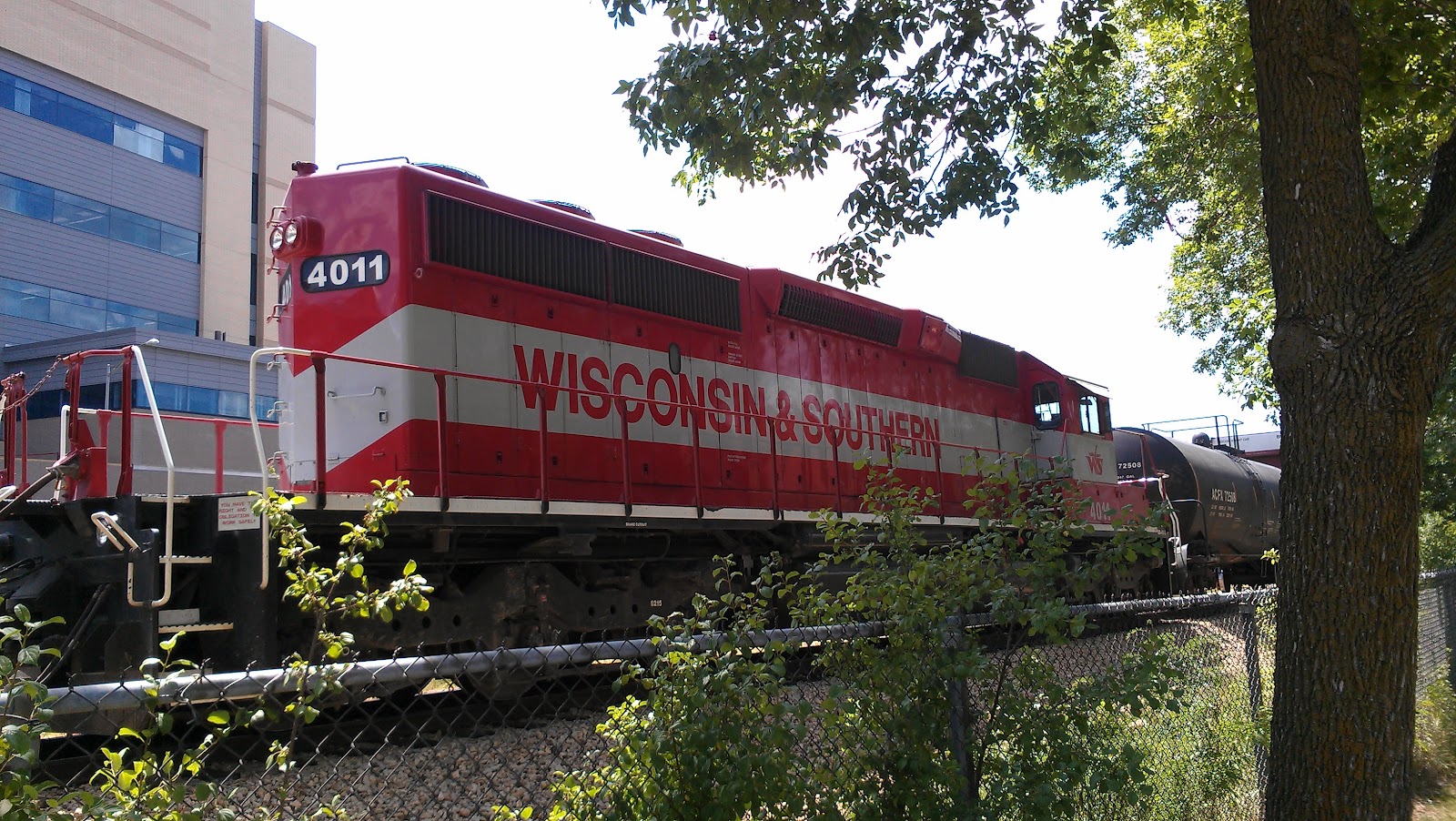
via Trainorders.com
Just got a call from my Horizon rep and found out that the retail prices on products will most likely hold where they are but the discount to dealers will be lowered by 8%. That is a big hit for the hobby stores. First Walthers with their 10% hit to dealers, now Horizon on Athearn products.
Bottom line good news for the model railroader bad news for the local hobby shop.
Athearn Good News / Bad News????
It’s bad news for everyone concerned with the hobby. The prices are killing Model Railroading. What’s bad news for the retailer is bad news for all of us, because it’s the retailers who grow the hobby.
An email from ExactRail. I’m expecting others to follow suit and I’m not happy about what this means for the hobby. The Hobby Shop plays a critical role promoting our hobby. I can’t imagine a business model that works without them.
Important Update
As of May 1, 2012, ExactRail will no longer offer a dealer discount and will discontinue our dealer network. Cost of production has increased considerably for ExactRail over the last two years. We have absorbed most of these increases through our margins, however this is not a supportable model for our business. Our conclusion is that we can keep prices reasonable by serving you directly. We believe we can both benefit from having direct interaction.
The future of ExactRail is bright with many exciting and innovative new products coming soon. Over the past year we have been busier than ever in new product development, the quality and authenticity of our products will exceed anything that ExactRail has released to date. You have a lot to look forward to from ExactRail.
Keep an eye on ExactRail.com and our Facebook page for some exciting upcoming announcements!
Happy Railroading,
The ExactRail Team
Check it out…. saw their ad in Rail Road Model Craftsman
Welcome to French and European Model Trains
The SNCF steam is really impressive.


That’s a lot of Zephyr cars. Nice stuff, great product, but how about a C&NW 400 instead?
PRODUCT ANNOUNCEMENT: HO California Zephyrs are coming Summer 2012! Don't miss them, PREORDER today!
Over at Mike’s Train House. I didn’t realize they were doing them. Check Out The Details And See It In Action: The HO GG-1 Electric
Great time for Eastern and New England modelers with Con Cor doing a Reading Crusader, a New Haven Blue Comet, and PPR MU Cars. Now how about some IC electrics for us Chicagoans?
Video below….


This past Monday, November 7, 2011 Rapido made model railroad history by commissioning from Creaform to perform the first-ever 3D scan of a real MLW/ALCO FA locomotive: FPA4 #6765 at Exporail, Canada's national railway museum in Montreal, Quebec. Jason, Dan and I all were in attendance as were about 30 of our customers who came up to join in the day's events.

A friend assures me the 400 can’t be far behind if Walthers is doing these cars. Just announced this Month and due Feb 2012.


 Finally, someone is doing an Electric in HO for the midwest modeler and they couldn't have started with a better model. MTH will be doing them in both Milwaukee Road and South Shore schemes. From MTH on the O scale version,
By the late 1940s, the engines on the Milwaukee Road's electrified Rocky Mountain Division were nearly three decades old and tired, and diesels were the wave of the future. Management was intending to pull down the overhead wires and dieselize the entire division. Then along came a big electric named Little Joe, and the wires stayed up for another quarter-century.
The Joes were actually built for another customer half a world away, Russia's Trans-Siberian Railroad. But by the time they were ready to deliver in 1948, the Cold War had frozen sales to the Soviet Union, and builder General Electric was stuck with twenty 5,500 hp locomotives designed to run on 3,300 volts DC - most built to Russian 5' track gauge. As the Milwaukee Road was one of the few American railroads with overhead DC power (at 3,000 volts), GE offered the entire order, including spare parts, to the Milwaukee at the fire sale price of one million dollars. At least one unit, painted in GE demo colors, was tested on both of the road's electrified divisions in 1948 and acquired the nickname "Little Joe" after Joe Stalin.
But the Milwaukee came up with reasons not to make the purchase, and in 1949 three units went to the Chicago, South Shore and South Bend Railroad for freight service. They lasted until 1983, earning the honor of last electric engines in US mainline common-carrier freight service. Brazil's Paulista Railroad bought five more Joes, nicknamed them Russas and operated them until 1999.
An upsurge of traffic from the Korean War convinced the Milwaukee it had made a mistake, and in August 1950 it purchased the remaining 12 Joes, without spare parts, for the original million-dollar price. All went to the Rocky Mountain Division between Harlowton, Montana and Avery, Idaho - ten designated EF-4 for freight service and two as EP-4s for Olympian Hiawatha passenger trains. Engineers loved the new Joes because they were more reliable than the road's ancient boxcabs and much less stressful to operate.
Originally the freight units worked in pairs, with a boxcab helper added on the division's tougher grades. But later in the 1950s a GP9 was attached to the Little Joe pairs and controlled from the lead Joe; this combination could run straight through electrified territory without adding or dropping helpers. By the following decade, Joes were simply cut in ahead of the freight diesels at the beginning of electrified territory, with the Joe's engineer controlling all units. Eventually, however, second-generation diesels brought an end to electrification, and on June 15, 1974, the last Little Joes folded their pantographs - ending 58 years, 6 months, and 16 days of Milwaukee main line electrification. While most of the Joes were scrapped, three survive today: one Milwaukee Road unit in Deer Lodge, Montana, and South Shore units at the Illinois Railway Museum in Union, Illinois and the Lake Shore Railway Historical Museum in North East, PA, just ten miles from the GE plant where it was built.
New for 2010, the M.T.H. Little Joe duplicates the brute strength and dependability of the original, complete with a detailed die-cast metal body and, for the first time in HO, operating pantographs that raise and lower automatically according to the direction of travel.

Our next workshop is scheduled for Thurs. November 29th at 7:30. We will begin construction on the Black River Junction layout that was featured in Model Railraoder starting with the January 2007 issue.Wish him luck... I'll try and visit one of the workshops.
Like any layout we will start by constructing the benchwork. Be a part of this project and learn how really simple it is to build your own model railroad. Unlike the layout in the series we will be using cork roadbed and code 83 Atlas FlexTrack.
Structures and Trains by Fred
DATE: November 29th, 2007 Address: 12 North Second Street
TIME: 7:30 PM Geneva, IL. 60134
For Information: 630.208.9011 or 630.584.3429
Future Work Shops:
Black River Junction (We will actually build this layout )
Structures: Plastic & Craftsman Kits building, Painting and Weathering
Digital Command & Control
Scenery Construction

 MTH takes some flak in comments over at Model Railroader,
 This model is the least asked for model in any poll I have seen, but here it is!!!!!!!!!It's not on my wish list, but it's a very neat looking model. I might become an Erie fan.
WOW! I can't wait to run out and NOT buy one of those!!
I hope any future releases are a little more grounded in the reality of the hobby


The atmosphere here holds between 40 and 50 percent less oxygen than at sea level. Extra oxygen is pumped into the unpressurized rail cars as they roll across the Tibetan plateau, but it's not clear that it does much good. All around me in the dining car, passengers were suffering the hangover-like symptoms of altitude sickness: throbbing headaches and severe nausea.
I was feeling relatively chipper due to Diamox, a prescription drug that prevents altitude sickness. Even so, I was lightheaded and a little dizzy. Back in my compartment, I plugged the oxygen hose into the wall and inhaled deeply. Almost instantly my mind cleared. But the effect lasted only as long as I breathed oxygen from the hose.
The surrealness was heightened by what looked like hundreds of enormous golf tees lining the tracks. They're an attempt to solve the railroad's most vexing problem.
Four hundred miles of the route lie atop a particularly unstable form of permafrost that thaws during the day and freezes at night, causing the tundra above it to rise and fall by inches. To try to prevent tracks from buckling and cracking, Chinese engineers elevated more than 100 miles of it and installed the giant golf tees along other stretches. These are cooling pipes that use solar energy to turn liquid ammonia into gas, chilling the ground and preventing the permafrost from melting.

Even casual passersby pause to admire this beautiful two-story brick and limestone depot built in 1876. Onetime headquarters for the Illinois Central's Northern Division, the 19-room structure featured passenger facilities on the first floor and housed division officials and staff on the upper level.
As times changed, division headquarters were moved elsewhere; passenger service ended in 1939, and the depot closed in 1967. Freight trains used the line into the 1980s. The tracks have since been removed.
As disuse led to disrepair, concerned citizens began efforts to save the historic station. It has been returned to life as the Amboy Depot Museum, filled with railroad memorabilia and local history items.
The telegrapher's office features a variety of telegraph keys, timetables and photos of train wrecks that occurred at Amboy. Original benches grace depot waiting rooms; there are original railroad documents, photos, railroad lanterns, switch keys and a great deal more.
A steam locomotive, a 1920s-era caboose and a century-old IC freight house on the grounds are open to tour.
Sitting at East Main and South East Avenue, the depot is open year-round, 1-4 p.m. Wednesday, Thursday, Sunday and holidays, 10 a.m.-4 p.m. Friday and Saturday. Admission is free.
Amboy is about 110 miles from downtown Chicago. For additional information, call 815-857-4700.