At Grinnell College, trains have been a part of campus life since the school's 1846 founding.
Cargo trains pass through campus, running north and south, two or three times each day, said Dann Hayes, director of media relations. There is another line that runs east to west through the town of Grinnell.
"Because of that, cross trains have to go extra slow, which is a bonus for us," Hayes said.
The trains blast their horns at least two intersections before arriving on campus, giving plenty of warning. To further ensure student safety, procedures to deal with train collisions have been outlined in handbooks that will be distributed in every classroom, office and at every telephone at the school, Hayes said.
"For the most part, I think it's just common sense."
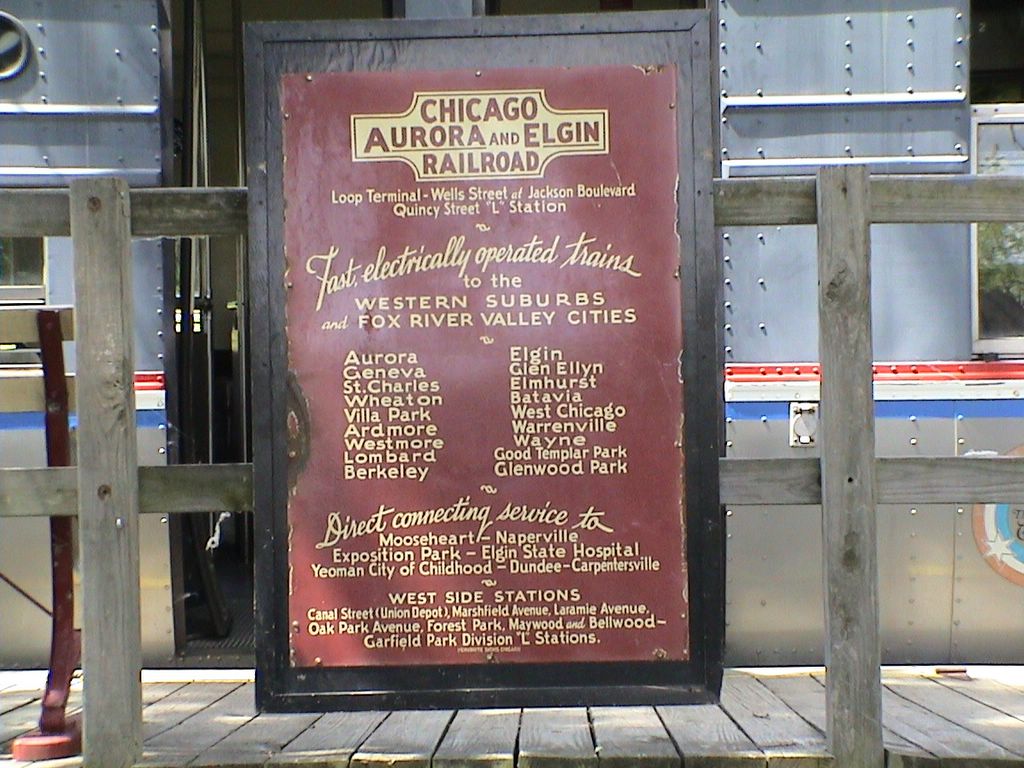
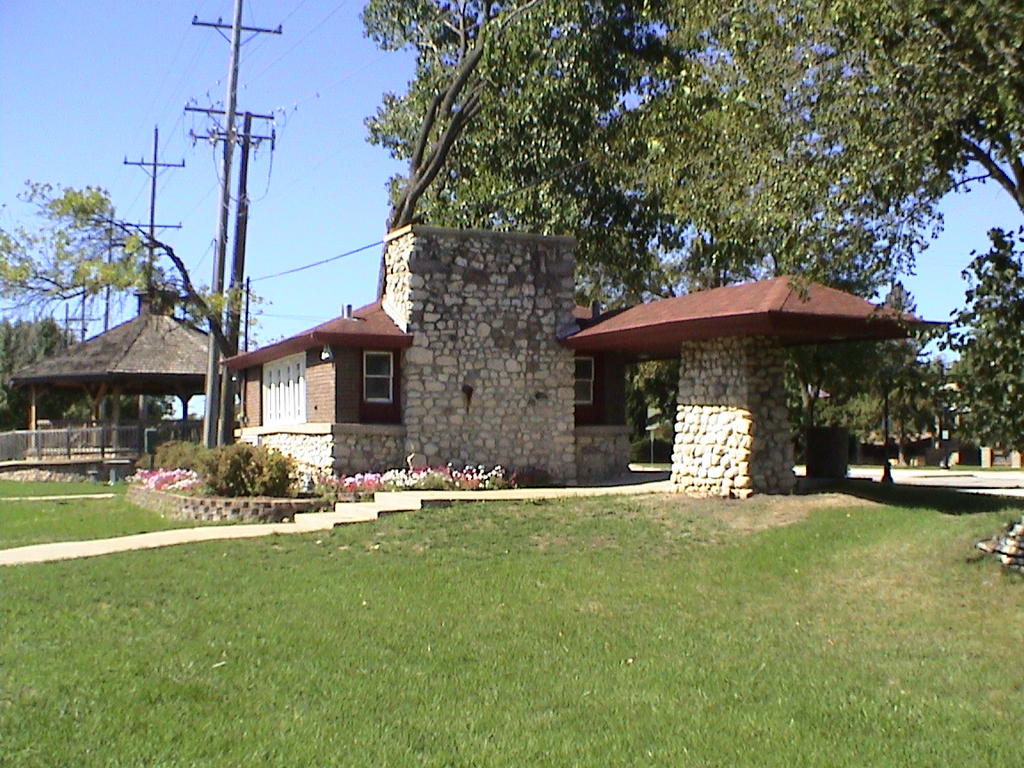
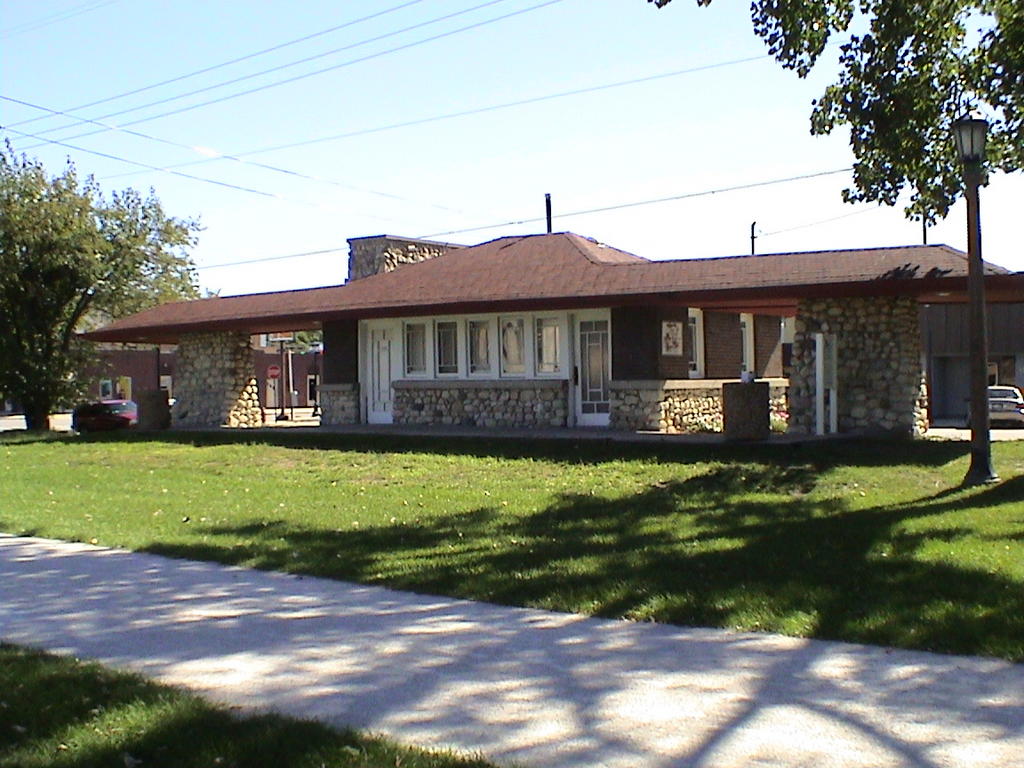
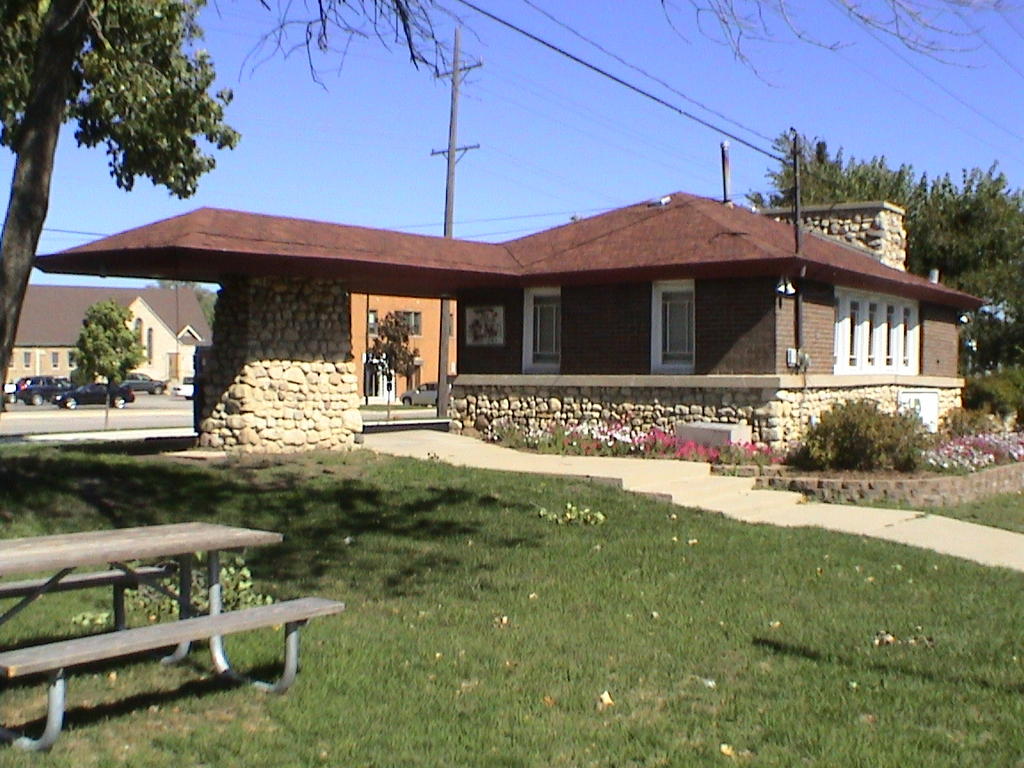
Train depots have plenty of history in Wayne. Karen Armbrust said the first one, known as Dunham Depot, was built in 1850 when one of the village’s founding fathers, Solomon Dunham, wanted a rail line closer to the land he owned.The picture is not on the link but it's a spitting image of the old Revell Small Town station.
The newer, bigger depot that the village is now trying to restore into the museum was built in 1884 and eventually boarded up after the last stops in 1950. A few years later, Karen said, it was moved to the Dunham Castle property by family member Jane Dunham.
Anyone interested in getting involved or seeking more information about the museum project can contact the village at (630) 584-3090.

Last train ran on this line in the late 1980s so this layout could cover a number of eras.


So when a a 13 year old kid asks you a big question, consider your response as it will hang in their office for the next 40 years. Ms. Ters gave a thoughtful, wise, and kind response to me. God bless her.
April 4, 1967
Mr. Bill Baar
1047 S. Clinton
Oak Park, Ill 60304
Yours is an interesting question, Bill...
for a fellow
your age.
As far as I know, the fellows working here were never exactly groomed for careers in the model railroading field. The Art Department became skilled in their line of work, and those with a special desire to work with railroad art found just what they wanted here.
The editors, of course, were skilled in the handling of words, and they could have succeeded anywhere. It happens, however, that some of them are more interested in railroading, and thoroughly enjoy their jobs. The man who succeeds in doing the work he would rather do than anything else is lucky indeed. So many people work at jobs which either bring good salaries, jobs which may be convenient to their homes, or jobs which they may hold for any number of reasons other than that they really enjoy them.
If you think you may have an aptitude toward writing, you might wish to do an article some day on your own railroad pike. If you are lucky enough to have it published, you might be on the way to becoming a "career model railroader", creating a job for yourself in that field --or if you have money-- you might want to start a hobby shop some day.
This all sounds like dreams stuff, Bill, but hope it does some good.
Sincerley,
Margaret J. Ters
Editorial Secretary